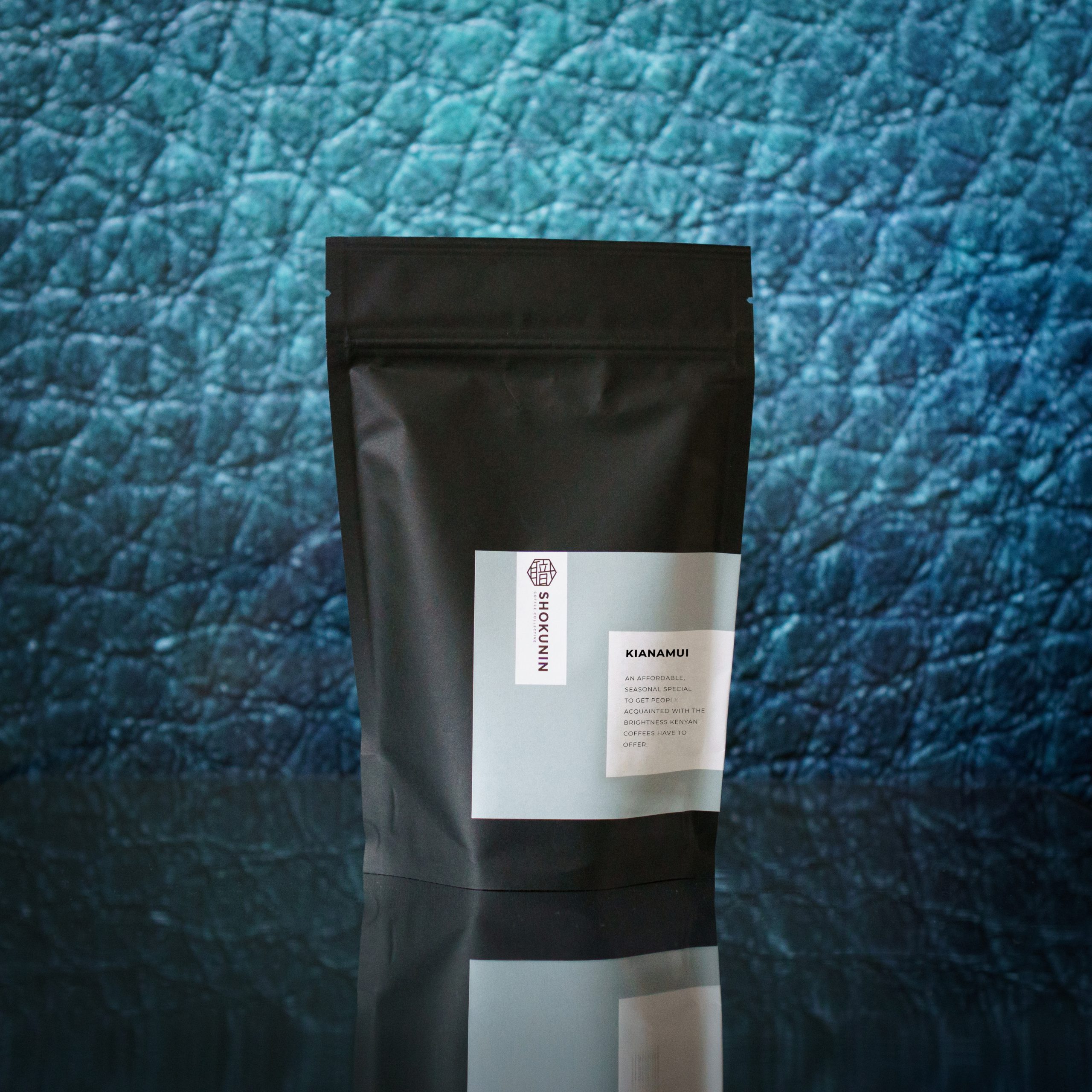
Kianamui
Kenya – Washed SL28 & SL34. Floral aromas like rosehip. Juicy sweetness like blackberry. Soft body like earl grey tea.
Kianamui
An affordable, seasonal special to get people acquainted with the brightness Kenyan coffees have to offer.
Region: Kirinyaga, Kenya
Altitude: 1,800 m.a.s.l.
Variety: SL28 & SL34
Processing: fully washed, 3 x 24hr fermentation, dried on raised beds
Additional information
| Weight | N/A |
|---|---|
| Region | Bensa, Sidama, Ethiopia |
| Altitude | 2,400 m.a.s.l. |
| Variety | 74/158, 74/110 and Setami |
| Processing | 72hr fermentation, dried on raised beds |
| Flavour | Floral aromas like jasmin and passion fruit. Juicy sweetness like peach. Silky body like caramel and earl grey tea. |
Jelle's Notes
About ten years ago, Kenyan coffee was one of the most popular origins because of its very floral notes and distinct cassis flavor. Over the past few years, I, and specialty coffee lovers with me, noticed many Kenyan coffees developed a brown sugar note and lost some of their clarity, which in turn made them less popular. I was still on the lookout for those classic washed Kenyan coffees, and Kianamui is a great example of exactly that. It’s floral, clean, and cassis-forward, without any brown sugar notes. This is how I recognize the Kenyan coffee taste, and that’s how specialty coffee drinkers seem to experience it as well.
Kianamui’s clean acidity really shines in espresso, but most people prefer it as a filter coffee where the cassis flavor stands out even more.
Producer
Kianamui is one of three washing stations within the New Ngariama Farmers’ Cooperative Society in Kirinyaga, in the central highlands of Mt. Kenya. The region’s volcanic soil, elevation, and steady rainfall have supported coffee production for generations and allowed for the development of some of Kenya’s most celebrated coffees.
Production at Kianamui has grown steadily over the past seven years, from about 580 tonnes of cherries in 2016 and 2017 to more than 1.6 million kilograms by 2025. More than 1,800 smallholders now deliver cherries to the station. Each farmer typically cultivates around half a hectare, where coffee grows alongside beans and potatoes and is shaded by avocado, macadamia, and mango trees. Many also grow tea as a secondary cash crop, reflecting the diverse agroforestry systems in the region. For most families in the cooperative, coffee remains an important part of their livelihood, even as they balance it with food crops and other work.
SL28 and SL34 dominate the variety mix, with minor inputs from Batian and Ruiru 11. SL28 and SL34 are the heritage cultivars that helped define Kenya’s reputation for complex flavors and cup clarity at high altitudes. Batian, named after the highest peak on Mt. Kenya, and Ruiru 11 were developed for disease resistance and reliable yields on the small plots typical of the region.
 Kianamui washing station is Rainforest Alliance certified and uses wastewater soak pits that allow clean water to filter naturally back into the environment, a rare but increasingly necessary feature as climate pressures mount in coffee‑producing regions. It is one of the ways the station continues to support the farmers who depend on it, and the land they work on.
Related products
Fausto Romo
€22.00 – €79.20
Coffee subscription
From: €12.00 / month
Churupampa
€12.00 – €43.20
Suke Quto Natural
€14.00 – €50.40
Kebede Wako
€13.00 – €46.80
Girma Sentayehu
€13.00 – €46.80
Gloria Ruby Peaberry
€13.00 – €46.80
Huila decaf
€14.00 – €50.40
Gloria Natural
€13.00 – €46.80
Keramo Natural
€17.00 – €61.20
Limmu Kossa
€13.00 – €46.80