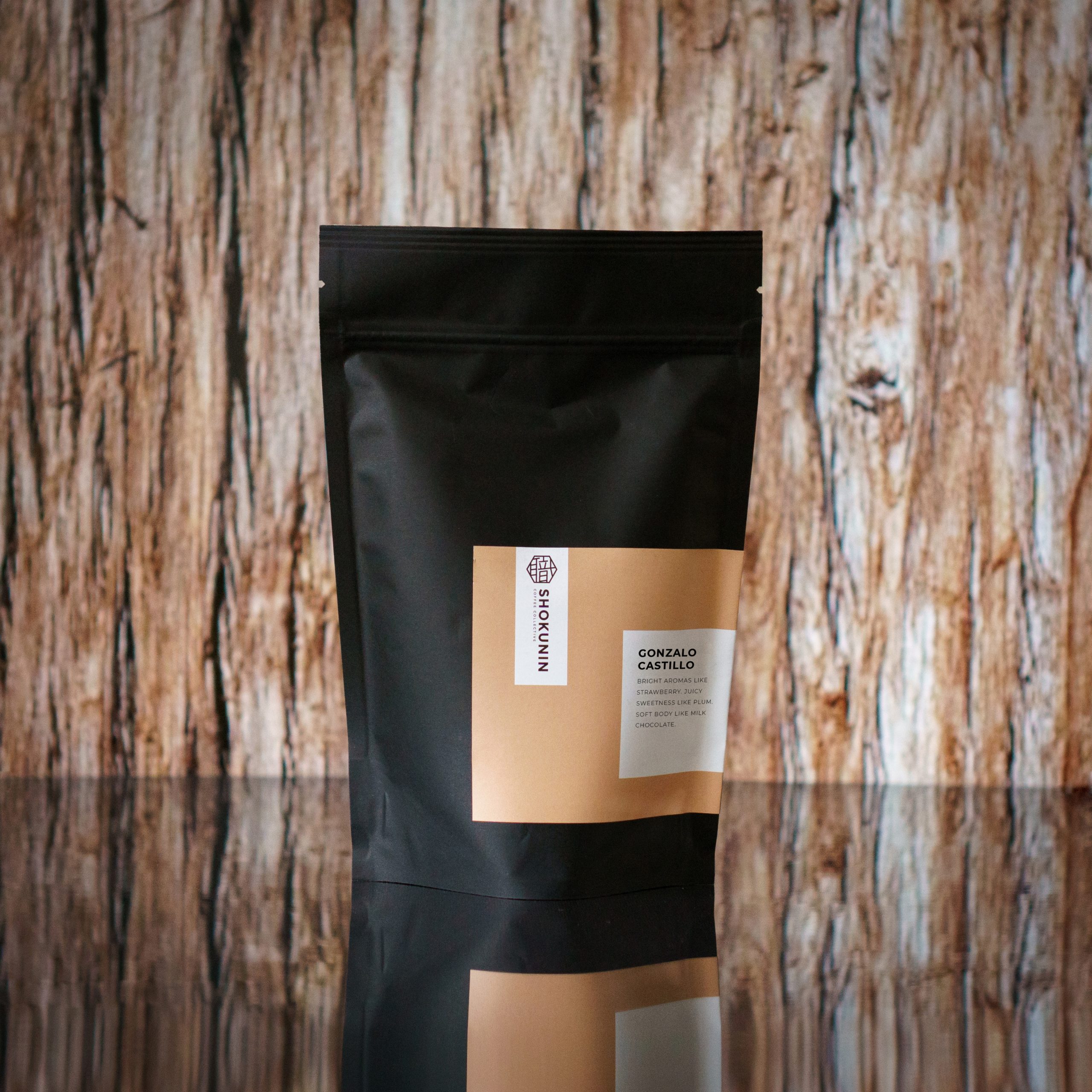
Gonzalo Castillo
Nicaragua – Natural Mix. Bright aromas like strawberry. Juicy sweetness like plum. Soft body like milk chocolate.
Gonzalo Castillo
After running a tradition coffee farm for over four decades, Gonzalo decided to pursue a fully organic approach. He produces his own fertilizer and all coffee is shade-grown, protected with mosses.
Region: Ocotal, Nicaragua
Variety: H10, H3, H18 , Starmaya , Marseillaise
Processing: natural, dried on raised beds.
Additional information
| Weight | N/A |
|---|---|
| Region | Galeh, Jimma, Oromia, Ethiopia |
| Altitude | 1,840 – 2,130 m.a.s.l. |
| Variety | Local varieties 74165, 75227, 74140, 74110, 74112 and 5227 |
| Processing | Natural, dried on raised beds |
| Flavour | Full, sweet aromas like black tea and passion fruit. Deep sweetness like melon and strawberry jam. Smooth, creamy body like hazelnut ice cream |
Jelle's Notes
Last year, I bought this coffee from Nicaragua for the first time. I liked the idea of having an easygoing, everyday coffee in the assortment that wasn’t too fruity. This year, I bought it again, partly because I thought, “Why not?” But also, because many customers told me they were really looking forward to its return. I hadn’t realized how popular it was, but it turns out to be quite beloved.
The enthusiasm comes from customers who appreciate its approachable, Fontana-like character. It’s easygoing and accessible, with more body and less pronounced fruitiness. This coffee’s popularity really grew from the excitement of our customers, and I’m happy to see it becoming a regular favorite.
Producer
Finca Las Promesas de San Blas
Gonzalo has been farming coffee for almost his whole life, over 45 years, along with livestock, fish, pigs, and horses. Throughout the decades, he has focused on respecting Mother Earth, a mindset instilled in him by his grandfather while growing up.
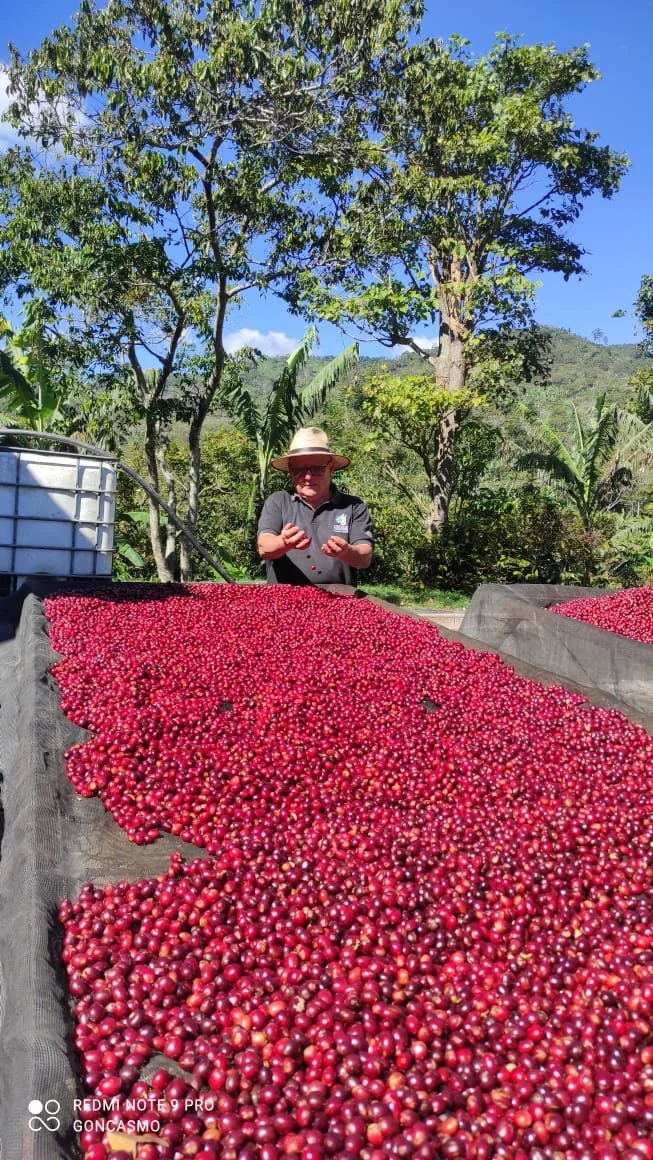 However, early on, Gonzalo still relied heavily on pesticides and inorganic fertilizers, influenced by his work with one of the largest exporters. A health crisis and a new perspective on industrial coffee changed everything. Instead of just being an organic producer based only on certificates, he refocused on becoming one in practice and shares his knowledge of organic farming with other farmers. He holds three certifications that support this ambition: Rainforest Alliance, CAFE Practices, and SMS from Ecom.
Gonzalo has three children who are all doctors: a pediatrician, radiologist, and psychologist. The coffee gene did not skip a generation, as they all have extensive knowledge of farm to cup, including farm management, cupping, and barista experience. Together, they bring deep knowledge of farm management, cupping, and barista skills, working alongside Gonzalo to produce great coffee.
The whole farm is planted in terraces because of its slope. They do not use herbicides, and pest control is based on biological products. They maintain a 10-meter buffer from the riverbank, avoiding planting along the entire shore. All coffee is shade-grown, protected by mosses. New coffee plants are intercropped with Canavalia, which provides nitrogen and organic matter. Every year, they compost coffee pulp to foster microorganisms that help create natural fertilizer.
Gonzalo strongly believes in a sustainable future and continues to scale up production without compromising the collective well-being of farmers and their communities. He looks forward to working closely with the importing company, This Side Up, in the coming years to spread regenerative practices locally. 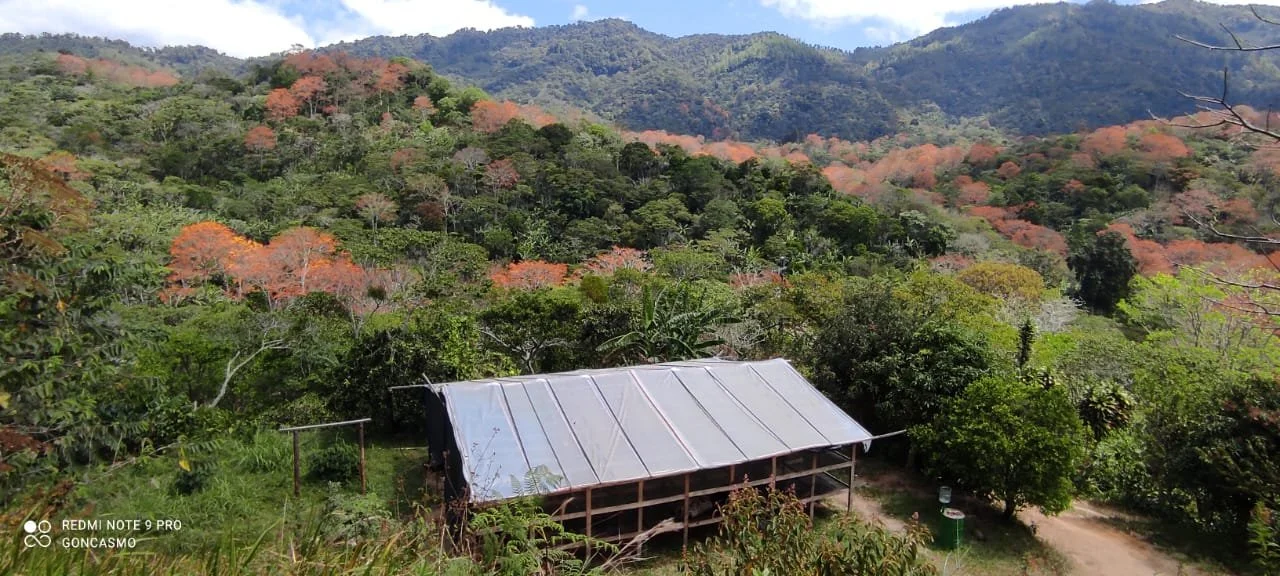
Pricing
Price Breakdown (/kg)
For us, sourcing coffee isn’t just about finding the right flavour, but more about finding the right people. We want to work with importers who are interested in building lasting relationships with the farmers and stay involved beyond the harvest. For this coffee, we’ve partnered with This Side Up. They represent producers directly, support long-term systems, and make sure pricing reflects the real work behind each lot. Their model is built on transparency, shared ownership, and a refusal to let commodity pricing define value. We pay more, but we know where it goes. That’s how we prefer to source our coffee.
How is this built up?
Related products
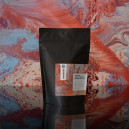
Argote Juan Pablo Super Special
€19.00 – €68.40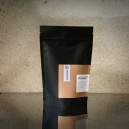
Argote Lactic Anaerobic
€16.00 – €57.60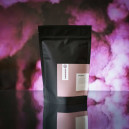
Sironko
€13.00 – €46.80
Coffee subscription
From: €12.00 / month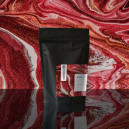
Espana
€19.00 – €68.40
Churupampa
€12.00 – €43.20
Ana Restrepo Natural
€16.00 – €57.60
Jose William Diaz
€22.00 – €79.20
El Renacer
€18.00 – €64.80
Gloria Natural
€13.00 – €46.80
Argote Anaerobic
€16.00 – €57.60